Record High U.S. Suicide Rate

Factors Contributing To the Rising Suicide Rate


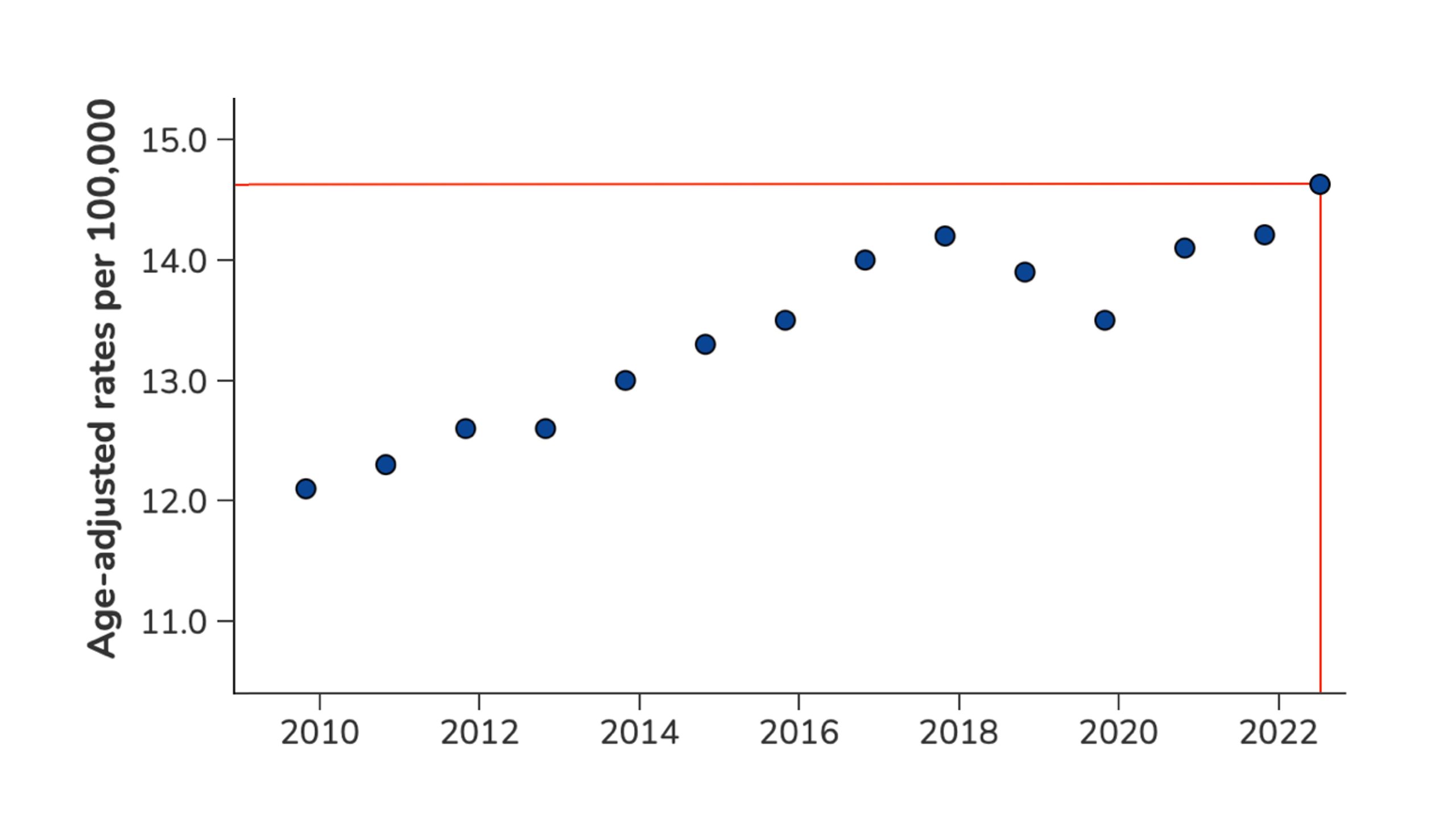
Suicide rates have been on the rise since the turn of the 21st Century – becoming even more pronounced in recent years.


In 2023, the suicide rate in the United States hit 14.7 (per 100,000 individuals), matching 2018 as the highest suicide rate since 1941.

Contributing Factors

There are multiple contributing factors to the rise in suicide rates which often overlap. More recently developed factors such as cyberbullying and social isolation have played a role in the overall uptick in rates.

1. Economic Stress

  • Job loss, financial instability, and economic downturns (such as the 2008 financial crisis and pandemic-related job losses) have been linked to higher suicide rates.
  • Financial insecurity contributes to long-term stress and depression.

2. Social Isolation & Loneliness

  • Digital interactions over in-person relationships have led to increased social isolation.
  • Elderly individuals and younger generations (especially Gen Z) report high levels of loneliness, which is a known risk factor.

3. Substance Abuse & Addiction

4. Social Media & Cyberbullying

  • Increased social comparison and exposure to negative content on social media can lead to feelings of inadequacy and depression.
  • Cyberbullying, particularly among teens and young adults, has been linked to increased suicide risk.

5. Mental Health Disorders

Mental Health’s Significant Role

Individuals with preexisting mental health conditions are more susceptible to experiencing suicidal thoughts and acting upon them.
1. Depression
Depression is a leading risk factor for suicide, though not all individuals with depression attempt or consider suicide. The disorder impairs the cognitive flexibility to think positive thoughts. Treatment through therapy and medication, however, can significantly reduce suicidal thoughts and behaviors.
2. Bipolar Disorder
Bipolar disorder is characterized by extreme mood shifts between depressive episodes and manic or hypomanic states. Both phases carry a heightened risk of suicide, particularly when left untreated. Proper diagnosis and treatment can help stabilize mood swings and reduce suicidal ideation.
3. Post-Traumatic Stress Disorder (PTSD)
PTSD develops after experiencing trauma, such as violence, combat, or accidents—commonly occurring among veterans. Symptoms such as flashbacks, nightmares, and emotional distress can contribute to suicidal thoughts. The risk is particularly high in individuals with co-occurring depression or substance abuse. Therapy and medication can significantly improve emotional stability.
4. Borderline Personality Disorder (BPD)
BPD is strongly linked to suicide due to intense mood instability. Nearly 70% of individuals with BPD attempt suicide, and around 10% follow throught. Dialectical behavior therapy (DBT) and medication has proven to help manage symptoms and reduce risk.
5. Substance Abuse
Substance use disorders significantly increase suicide risk, as drugs and alcohol impair inhibitions—heightening depression, for example, or leading to impulsive actions. Many who struggle with addiction also have co-occurring mental health disorders. Treating both the addiction and underlying mental health issues reduces suicide risk.

Reversing Suicide Rate Trends

Reversing these increasing suicide rates can be accomplished through improving the accessibility of mental health services and increasing suicide awareness.

Suicide prevention advocates have noted that the integration of mental health care into primary healthcare for improved access to mental health services reduces suicide rates as well. Such practices have improved risk screening and assessment, resulting in a 25% decrease in suicide attempts in the 90 days after a primary care visit compared to usual care clinics.

Psychologists have also found that evaluating newer approaches like EHR-derived algorithms, internet-based screening methods, ketamine’s benefit for preventing attempts, and passive monitoring of acute risk changes have been sucessful in preventing suicidal thoughts and behaviors. Advancements such as these combine accessible mental health care while remaining on the forefront of technology to combat suicide effectively.

The Door Switch™ is also actively finding solutions to reduce suicide rates, among veterans in particular. Our over-the-door sensors alert behavioral healthcare when an inpatient attempts self-harm. A top-of-the-door alarm immediately notifies attending staff of a hanging suicide attempt. The adoption of these technologies has the potential to significantly reduce suicide rates by enabling earlier detection and more effective intervention.

Discovering Mindfulness: The Benefits of Meditation on Mental Health

In today’s fast-paced world, where stress and anxiety dominate daily life, setting aside time to practice mindfulness has become a common habit for many. Meditation, an ancient practice with roots in various cultures, offers a pathway to cultivate mental well-being amidst daily obligations and stressors.
_________________________________________________________________________
Meditation encompasses a spectrum of techniques designed to achieve a heightened state of awareness and inner peace—with each approach sharing the goal of quieting the mind and reducing stress levels.

Regular meditation practice can alleviate symptoms of anxiety and depression by promoting neuroplasticity, the brain’s ability to adapt its neural networks through growth and reorganization in response to experiences.

Neuroimaging studies conducted by Harvard Medical School reveal that meditation induces changes in brain regions associated with emotional regulation and stress response. These structural changes contribute to enhanced emotional resilience and reduced reactivity to external stressors.


Types of Meditation

Meditation encompasses a broad range of techniques designed to cultivate mindfulness, relaxation, and self-awareness. These practices vary in approach, from focusing on breath and bodily sensations to engaging in guided imagery or repeating mantras.

Some forms, like mindfulness meditation, emphasize present-moment awareness, while others, such as transcendental meditation, use repeated phrases to achieve deep relaxation. Each type of meditation offers unique benefits, making it accessible to individuals with different preferences and goals.

Mindfulness Meditation

  • Originates from Buddhist teachings.
  • Involves observing thoughts without judgment.
  • Combines concentration with awareness.
  • Suitable for solo practice.

Spiritual Meditation

  • Found in most spiritual and religious traditions.
  • Aims to deepen connection with a higher power.
  • Ideal for those seeking spiritual growth.

Focused Meditation

  • Concentrates using the five senses.
  • Involves focusing on internal or external elements, like breathing or candle gazing.
  • Helps enhance focus and attention.

Movement Meditation

  • Incorporates gentle physical activities such as walking, gardening, or yoga.
  • Emphasizes connecting movement with the present moment.
  • Beneficial for those who find peace in action.

Mantra Meditation

  • Prominent in Hindu and Buddhist traditions.
  • Uses repetitive sounds to clear the mind.
  • Suitable for those who prefer focus through sound.

Transcendental Meditation

  • Founded by Maharishi Mahesh Yogi.
  • Involves silently repeating a personal mantra.
  • Aims to induce a state of relaxed awareness.
  • Best learned from certified practitioners.

Progressive Relaxation

  • Also known as body scan meditation.
  • Focuses on tensing/relaxing muscles sequentially.
  • Used to reduce stress and promote relaxation.

Loving-Kindness Meditation

  • Enhances feelings of compassion and kindness.
  • Involves sending well-wishes to oneself.
  • Beneficial for those harboring negative feelings.

Visualization Meditation

  • Entails visualizing positive scenes or images.
  • Aims to enhance focus and reduce stress.
  • Ideal for individuals who enjoy guided imagery.


Making Meditation a Daily Habit

Meditation offers a well-rounded approach to managing stress and enhancing overall well-being. Incorporating meditation into daily routines can yield benefits. Even brief, but regular practice helps the mind regulate and balance emotions leading to mental clarity.
  • Start Small: Begin with short sessions (5-10 minutes) and gradually increase duration as comfort grows.
  • Create a Space: Designate a quiet corner or room conducive to relaxation.
  • Focus on Breath: Use deep breathing exercises to anchor your attention and calm the mind.
  • Embrace Imperfection: Don’t judge thoughts or distractions; gently return focus to the present moment.
Meditation is more than just a stress-reduction tool—it’s a gateway to deeper self-awareness and emotional resilience. Committing to regular practice helps develop a sense of inner stability that extends beyond meditation sessions and into everyday life.
_________________________________________________________________________
Over time, practicing meditation helps rewire the brain to respond to life’s challenges with a sense of clarity—creating a mindset that prioritizes presence over-reactivity.
_________________________________________________________________________
Whether used for relaxation, spiritual growth, or mental clarity, meditation helps in navigating life with intention, focus, and a sense of balance.

Transitioning Into the New Year

Creating “Atomic” Mental Health Habits

Anyone can make a list of New Year’s resolutions.

  • Exercise Daily
  • Create a Budget
  • Wake Up Before Sunrise
  • Meditate and Practice Gratitude

However, maintaining these resolutions long-term is often a greater challenge for many. When setting their goals, many people overlook the crucial importance of mental health. One key reason for this struggle is the tendency to focus solely on external, observable changes that are easily measured, often neglecting the role of internal wellness.

One’s resolutions may focus on their physical health, finances, or productivity—but the success of these goals is directly tied to their psychological well-being. There exists a yin and yang relationship between the two.

For example, striving to wake up before sunrise might falter without addressing the underlying reasons for poor sleep, such as revenge bedtime procrastination or nighttime anxiety, which make the next morning feel unmanageable.

By grounding resolutions in mental health rather than external goals, one can address the root causes that influence progress and create a more effective path toward improvement.

Atomic Mental Health Habits

The bestselling self-help book Atomic Habits by James Clear focuses on the power of small, incremental changes in behavior to create lasting transformation. Clear explains that by focusing on tiny, consistent habits (what he calls “atomic habits”) individuals can build momentum toward achieving significant goals.

By honing in on the psychological aspect of habit formation, developing “atomic mental health habits” can improve mood, reduce anxiety, allow for clearer thinking, and enhance self-esteem and confidence

Examples of habits to improve mental health include:

  • Getting restful, high-quality sleep. Research shows people who sleep 6 hours or less per night are 2.5 times more likely to experience frequent mental distress than those who sleep more. Sleep experts recommend avoiding caffeine after 3 p.m., maintaining a consistent sleep schedule, and keeping the bedroom temperature around 65°F (18.3°C) for optimal rest.
  • Incorporating physical activity into daily routines. Regular physical activity has been shown to improve mood and reduce symptoms of depression and anxiety by releasing endorphins and enhancing brain function. According to the CDC, just 30 minutes of moderate exercise five times a week can lower the risk of mental health disorders, with additional benefits for cardiovascular health and sleep quality.
  • Sticking to a healthy diet. A balanced diet rich in fruits, vegetables, whole grains, and lean proteins is linked to better mental health outcomes, with studies showing that poor nutrition can exacerbate conditions like depression. Additionally, higher total fruit and vegetable (FV) intakes have been associated with lower perceived stress.
  • Reducing social media usage. Excessive social media use is associated with increased rates of anxiety, depression, and poor self-esteem, with a study finding that users who spend more than three hours daily on social media are 60% more likely to experience mental health challenges. Limiting screen time to 30 minutes daily has been shown to improve well-being and reduce symptoms of loneliness significantly.

Turning these mental health habits into “atomic habits” targets the underlying psychological factors that influence overall health and resilience. Focusing on tiny daily actions can lead to lasting improvements in mental health, making it easier to sustain long-term change.

How to Sustain Your Habits

Building and sustaining habits for better mental health starts with consistency, patience, and small, manageable steps. Focus on one habit at a time to build momentum.

Tracking your progress is a powerful way to stay consistent. Whether you use a journal or an app, monitoring sleep, exercise, or screen time allows you to celebrate milestones and stay motivated.

You can also integrate new habits into your daily routine by pairing them with existing ones. For instance, try meditating before breakfast or doing light stretches after waking up.

These small adjustments can make your habits feel natural over time. When setbacks happen, practice self-compassion. Instead of being overly critical, acknowledge the challenge, refocus, and use the next opportunity to get back on track.

Sustaining meaningful habits takes patience and self-kindness. By tracking progress, embedding habits into daily routines, and treating setbacks as learning moments, you can create lasting changes that support your mental health and long-term goals.


Navigating the Challenges of the Holiday Season

Understanding and Managing Holiday Stress and Depression

In the 1946 holiday classic It’s a Wonderful Life, George Bailey discovers the profound impact his life has had on others, even as he struggles with stress and depression from the holiday season.

The holiday season, often associated with joy and celebration, can become a source of anxiety and depression for many. Emotional challenges develop from a variety of factors, including Seasonal Affective Disorder (SAD) due to less sunlight and shorter days, financial strain tied to a busy shopping season, and a rise in complicated social dynamics during holiday gatherings.

Holiday depression, unlike general depression, is a seasonal condition triggered by the unique stressors of the holiday period. Psychologist Dr. Dawn Potter notes that holiday depression can affect individuals of all ages and backgrounds, stemming from feelings of isolation and anxiety about missing out on social events.

Frequent Causes of Holiday Stress

Multiple factors contribute to this decline in mental wellness during the holiday season.

Strenuous work schedules lead to an overcommittment to events and responsibilities leading to mental fatigue.
Financial stress from increased spending on gifts, travel, and events exacerbate anxiety, compounded by the pressure of striving for perfection in hosting, decorating, or gift-giving.
Reduced daylight and colder weather can cause Seasonal Affective Disorder and what are often known as the “Wintertime Blues.”
Social anxiety from large family gatherings may feel overwhelming for those uncomfortable in social settings.
Trauma and negative memories associated with past holidays can resurface, impacting present emotions.

Recognizing Signs of Stress and Depression

Identifying the symptoms of holiday-related depression is important for effective management. Indicators include:

Persistent sadness or hopelessness
Loss of interest in previously enjoyed activities
Anxiety, irritability, or heightened stress levels
Sleep disturbances, such as insomnia
Intrusive or distressing thoughts
Strategies for Managing Holiday Stress

Effective coping strategies can alleviate the emotional burden of the holiday season.

Limiting technology usage and spending time with family and friends for increased social connection.
Setting realistic expectations by focusing on setting achievable goals for the holidays, this time of year can be used as a time to “wind-down,” rather than one to “ramp-up.”
Prioritizing tasks by creating a list to organize and manage holiday responsibilities can help achieve a state of mindfulness around the winter season.

Clockwise from top: James Stewart, Donna Reed, Carol Coombs, Jimmy Hawkins, Larry Simms and Karolyn Grimes. (Photo by Herbert Dorfman/Corbis via Getty Images)

Maintaining Happiness, Health, and Safety During the Holiday Season

Acknowledging emotions, seeking support, and prioritizing mental health are crucial practices for managing stress during the holiday season.

For those struggling, there are multiple mental health resources, including therapy and support groups, which provide assistance in navigating this time of year.

The Door Switch would like to wish everyone a happy, healthy, and safe holiday season this year!

NOVEMBER 11 IS VETERANS DAY

How Hospitals Are Implementing Technology to Save Lives

Military service takes a heavy toll on mental health due to the extreme physical, emotional, and psychological demands faced by service members.

Combat exposure, traumatic experiences, and deployment-related stress can lead to conditions like PTSD, anxiety, and depression. Reintegration into civilian life further challenges veterans, as they struggle with a loss of identity, relationship strain, and employment difficulties.

These stressors, combined with stigma and barriers to seeking mental health care, frequently result in substance abuse and an increased risk of suicide.

The use of technology in these facilities has become critical. That is why veteran hospitals are leveraging technology to improve healthcare outcomes, save lives, and prevent suicide among veterans. It is just one way to protect those who have made the ultimate sacrifice.

Telehealth Services & Crisis Chatlines

An estimated one-third of the 8.3 million veterans enrolled in VHA live in rural areas. As hospitals make the foray into Telehealth, these services enable veterans in these underserved areas to connect with healthcare providers remotely. This reduces barriers to care, helping veterans access timely support for mental health conditions like PTSD and depression, which are risk factors for suicide.

VA Video Connect allows veterans to attend virtual medical and mental health appointments from home, while mental health mobile apps such as PTSD Coach and Mindfulness Coach offer self-guided mental health support and coping tools, making it easier for veterans to manage their symptoms.

The Veterans Crisis Line is a lifeline for veterans experiencing suicidal thoughts. The line, accessible via phone, text, or online chat, connects veterans with trained responders. The integration of digital chat and text options has made it easier for veterans, especially younger ones or those who may prefer not to talk on the phone, to seek immediate help.

Wearable Devices & Remote Monitoring

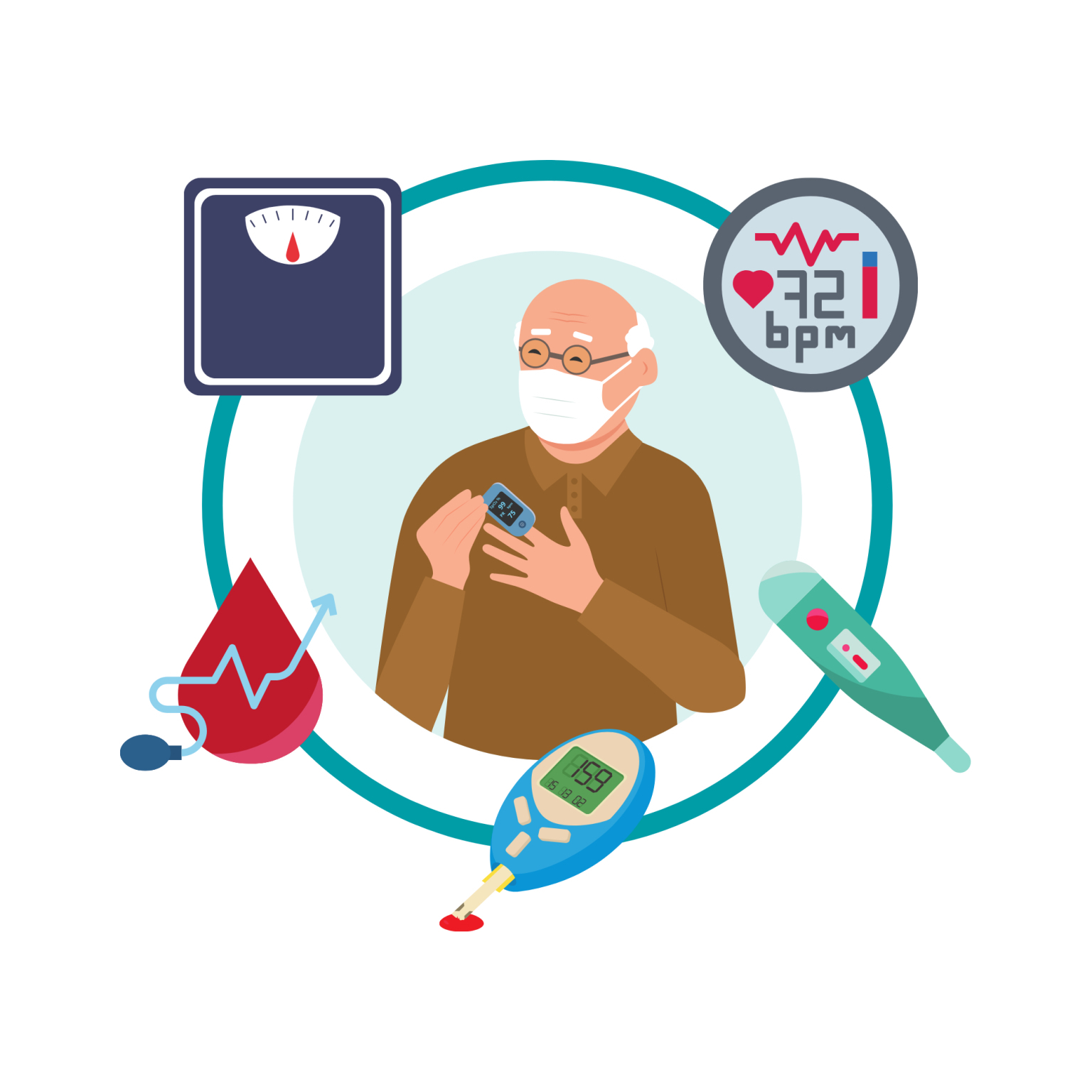
Hospitals and healthcare networks are piloting the use of wearable devices that can monitor vital signs, sleep patterns, and other indicators of mental or physical distress. These devices send real-time data to healthcare providers, who can intervene if they detect warning signs of a mental health crisis, such as irregular sleep or elevated heart rates, which can correlate with anxiety or depression.

Blood pressure monitors are equipped with arm cuffs that determine if blood pressure is low, normal, or high.
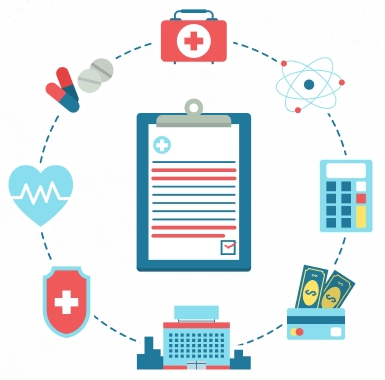
Blood glucose meters analyze blood samples to measure sugar levels in blood.
Cardiac monitors have the ability to track the heart’s electrical activity.
Pulse oximeters are a fingertip device that track oxygen levels in blood.
Smartphone apps help track physical activity via Bluetooth connection to a smartwatch. These can also monitor sleep patterns and heart-rate.

Electronic Health Records (EHRs)

Electronic health records are able to be shared across hospital departments and with healthcare systems.
This allows for better-coordinated care and quicker identification of veterans in need of health interventions.

EHRs allow healthcare providers to access a veteran’s complete medical history, regardless of where they received care. This is useful for veterans who may receive services from different VA hospitals or clinics. Veterans who require specialized treatments for service-related conditions, such as PTSD or traumatic brain injuries, can benefit from more immediate referrals.
Additionally, providers can collaborate more efficiently across disciplines (e.g., primary care, mental health, physical therapy) since they can access a veteran’s entire care plan in real-time, improving continuity of care.

System storing these EHRs can automatically flag potential medication interactions or allergies, ensuring safer treatments for veterans, many of whom may have complex health conditions.

Over-the-door Alarms

Door alarm systems involve sensors that are installed on the tops of door frames in patient rooms or bathrooms. These sensors detect any
abnormal pressure or movement over the door, which could indicate a suicide attempt.

Our Door Switch alarm systems are designed to be discreet to avoid causing unnecessary anxiety for patients, while still providing a crucial layer of safety. The systems are non-intrusive and do not interfere with the normal functioning of doors.


Our system is the only door sensor that extends above the top of the door, with a finely tuned sensitive pressure switch that runs across the top of the door and eliminates hinge points. If the system detects a potential hanging attempt, an alarm is triggered. This sends an immediate alert to hospital staff, enabling them to respond rapidly and potentially save the patient’s life.

The Veterans Hospitals of Tomorrow

The past decade alone has seen a meteoric rise in technology geared toward improving mental health and safeguarding against suicidal events.

The hospitals of tomorrow will come equipped with technology to promote veterans’ mental health. This proactive approach to mental health care will ensure veterans receive the support necessary to thrive.

August is National Wellness Month

Exploring the Dimensions of Wellness

The month of August marks the focus on National Wellness Month – a time to prioritize self-care, stress management, and healthy routines. Falling between the leisure of summer and up-ramping of work, school, and other commitments, August often gets lost in the haze of life as an awkward transition month.

This August, implementing the multiple dimensions of well-being can change that.

Wellness includes eight interdependent dimensions: emotional, physical, occupational, social, spiritual, intellectual, environmental, and financial.

Similar to a balanced diet essential for nutrition, finding a balance of these factors helps promote wellness in all areas of life, setting one up for success.

Emotional Wellness

Emotional wellness encompasses the skills and knowledge to identify personal feelings through introspection and the ability to handle those emotions.

Practicing emotional wellness through self-reflection, meditation, and coping exercises can help improve emotional intelligence – the ability to understand, use, and manage emotions in positive ways to relieve stress, communicate effectively, empathize with others, and defuse conflict.

Financial Wellness

Financial wellness is often neglected when focusing on mental well-being – typically centering on physical health, mental clarity, and emotional stability.

Facing reality, finances play a crucial role in sustaining a healthy lifestyle both physically and mentally.

Financial wellness entails comprehending and effectively managing one’s financial circumstances through saving, budgeting, investing, and making other decisions with money that resonate with personal aspirations and values. The empowerment through managing finances cultivates a sense of security and peace.

Social Wellness

Social wellness is the foundation of our interactions and relationships with others, impacting our sense of belonging and connection.

This form of wellness can be strengthened by building and maintaining healthy, supportive relationships, as well as effectively communicating and navigating social situations amongst family, friends, and acquaintances.

Spiritual Wellness

Spiritual wellness is centered on the search for meaning and purpose in life, connecting with something greater than oneself. It may involve religious beliefs, meditation, or personal values and perspectives.

Nurturing spiritual wellness contributes to inner peace, resilience, and a balanced life by aligning actions with core beliefs and fostering a sense of fulfillment.

Occupational Wellness

Occupational wellness reflects the satisfaction and fulfillment derived from one’s work or career. It encompasses finding meaning in professional roles, balancing work with personal life, and pursuing opportunities for growth and development.

Achieving occupational wellness leads to a sense of accomplishment, purpose, and overall well-being, as one’s career aligns with personal goals and values.

Physical Wellness

Physical wellness is the cornerstone of overall health, involving regular physical activity, balanced nutrition, and adequate rest. It requires maintaining a healthy body through lifestyle choices that support physical vitality and prevent illness.

Prioritizing physical wellness not only enhances energy levels and physical strength but also plays a crucial role in mental and emotional well-being.

Intellectual Wellness

Intellectual wellness is the active pursuit of mental growth and cognitive stimulation. It involves engaging in activities that challenge the mind, such as learning new skills, exploring creative outlets, and staying curious.

Fostering intellectual wellness leads to lifelong learning, adaptability, and a greater understanding of the world, contributing to a well-rounded and informed life.

Environmental Wellness

Environmental wellness emphasizes the importance of our surroundings on overall well-being. It includes creating and maintaining spaces that are safe, clean, and conducive to health, as well as making choices that respect and protect the environment.

Making the Transition this August

This month, step aside, and take the time to analyze every aspect of your life to prioritize mental wellness into the fall season. As winter approaches and clear skies turn gray, having mental wellness on-track can combat seasonal depression from busier days indoors.

The Door Switch™ wants to continue the fight for more awareness and provide additional resources to dispel the myths about mental health issues and solutions for safety issues. We also continue to strive to provide a product that keeps the hospital environment safe. We continue to be committed to better practices and procedures in the mental health community. For information concerning our safety product, please click here.

If you are in crisis or are experiencing difficult or suicidal thoughts, call the National Suicide Hotline at 1-800-273 TALK (8255).

Sincerely,

The Door Switch™

Suicide Rates On the Rise For Past 20 Years

Hospitals Respond with Better, Patient Centric Design & Construction

Hospitals Design Smarter & Safer

Healthcare is a rapidly-evolving industry – hospital design and construction are experiencing significant shifts to meet new challenges and opportunities. From incorporating cutting-edge technology to adapting to industry consolidation, modern hospitals are setting a new standard for high-quality care, and leaving the old language of hospital design in the dust.

One main trend is to raise the experience for the patients and their families. The New Valley Hospital in Paramus, New Jersey created 370 inpatient beds in its new hospital with the key elements being “patient centric” and technology friendly. This facility checks many of the boxes for new hospital planning, building and community outreach.

Other must haves for facilities are flexibility, a holistic approach, and innovative design strategies – using technology where appropriate to keep the patients safe.

Flexibility is no longer a luxury but a necessity in hospital design. Flexible hospital designs enable facilities to reconfigure spaces that can adapt to new medical practices, technologies, and patient expectations.

In behavioral health facilities, flexibility, patient centric design, and innovative design strategies focused on safety are of PARAMOUNT importance.

The Door Switch has long been in the “patient-centric” business, as our goal is to not only protect the patient from self harm, but to also be non invasive as a preventative detection device, providing both privacy and dignity to the patients in the inpatient units. We are happy to see hospitals pool their resources with a main goal being focused on the patient’s experience, comfort and health.

Suicide is On the Rise Between 2000 and 2022

It’s no secret that suicide is on the rise. In 2021, 12.3 million American adults seriously thought about suicide, 3.5 million planned a suicide attempt and 1.7 million attempted suicide. Sucide was the 2nd leading cause of death for people ages 10-14 and 20-34 in 2021 and the rate has steadily increased in the U.S. over the past 20 years.

It has risen an astounding 36% increase from the years 2000 – 2021, the most recent data shows. Suicide was responsible for 48,183 deaths in 2021, and the national suicide rate increased an additional 2% between 2021 and 2022.

Youth have been particularly affected. Between 2007 and 2019, there was a significant increase in suicides among youth 10 to 24 years of age. It is the second leading cause of death for this age range, with homicides being third and malignant neoplasms a distant fourth.

Suicide Attempt Rates Are On the Rise

Like suicide deaths, suicide attempt rates also increased in the past decade, particularly among female, non-Hispanic white, and non-Hispanic Black students. In 2021, 22% of high school students reported suidide ideation, with highest prevalence among female (30%), American Indian or Alaskan Native (27.3%), and lesbian, gay, or bisexual youth (48.1%).

Hospitals Respond to Alarming Trends With Better Design & Patient Centric Experience

Hospital officials have to respond. In order to accommodate these disturbing trends and other worrisome declining public health trends, hospital design is radically changing – for the better. In new design, they are integrating wellness with healing. Hospitals are incorporating features such as natural light, green spaces, and wellness programs to promote holistic health. These elements enhance the patient experience and contribute to faster recovery times and improved overall well-being.

The rapid pace of technological advancements and evolving patient expectations are affecting not just hospital designs, but hospital experiences, as these new concepts are driving hospitals to be safer, happier, and healthier destinations.

The Door Switch™ wants to continue the fight for more awareness and provide additional resources to dispel the myths about mental health issues and solutions for safety issues. We also continue to strive to provide a product that keeps the hospital environment safe. We continue to be committed to better practices and procedures in the mental health community. For information concerning our safety product, please click here.

If you are in crisis or are experiencing difficult or suicidal thoughts, call the National Suicide Hotline at 1-800-273 TALK (8255).

Sincerely,

The Door Switch™

Major Steps in Veteran’s Suicide Prevention

VA to Provide free Emergency Suicide Prevention Care to Nearly 50,000 Veterans

VA Improving Accessibility for Veteran’s Care

The latest policy from the US Department of Veteran’s Affairs now allows eligible Veterans and certain former service members experiencing acute suicidal crises to seek emergency healthcare at any VA or non-VA facility without any financial burden.

This coverage encompasses inpatient or crisis residential care for up to 30 days, and outpatient care for up to 90 days. Enrollment in the VA system is not required to utilize this benefit. More than 50,000 Veterans and former service members have utilized this service, receiving critical care that has collectively saved over $64 million in healthcare expenses.

The extension of healthcare options will reduce Veteran suicide rates by ensuring that no-cost, high-quality care is available during times of crisis. The policy significantly broadens access to emergency suicide care for up to 9 million Veterans, regardless of VA enrollment status or facility location.

Moreover, the benefit extends to individuals who do not meet the standard definition of a Veteran, including those honorably discharged under certain conditions, as well as service members—such as reservists, national guard members, and those involved in specific combat or support roles—who meet designated service criteria.

The Alarming Veteran’s Suicide Statistics

The US Department of Veteran’s Affairs aims to curb the statistics surrounding Veteran’s Suicide through the expansion of mental health resources for veterans and former service members.

1. In the U.S., veterans are 1.5 times more likely to die by suicide than non-veteran adults.

2. An average of 17.5 veterans per day died by suicide in 2021  (the most recent year for which data is available).

3. In 2017, nearly one in every seven suicides nationally was a veteran—13.5% annually—compared with Census data that shows veterans make up about 8% of the U.S. adult population.

4. Approximately 14% to 16% of the US service members deployed to Afghanistan and Iraq have been affected by PTSD or depression.

5. In 2020, Veterans age 18-34 had an unadjusted suicide rate of 46.1 per 100,000, while the rate was 31.8 per 100,000 for those age 35-54, 27.4 per 100,000 for those age 55-74 and 32.0 per 100,000 for those age 75 and older.

Shifting the Conversation

Stigma surrounding veteran suicide is driven by several factors, including societal misconceptions about mental health, the military’s emphasis on strength and resilience conflicting with veterans seeking support, and fears of career repercussions for those who voice their struggles with mental illness.

There is often a lack of understanding between civilians and veterans, perpetuated by stereotypical portrayals of veterans in film, TV, and mass media. Concerns about confidentiality further deter veterans from seeking help.

To address these issues, it’s crucial to raise awareness, provide education, and ensure accessible mental health care to foster a supportive environment for veterans.

1. Understanding Suicide Among Veterans

Research highlights the importance of community connections for veterans. Veterans who feel integrated within their communities, with friends and reliable support networks, are less likely to die by suicide.

2. Recognizing PTSD in Veterans

Traumatic events such as military combat, assault, and disasters can have enduring negative effects. While PTSD is not exclusive to military personnel, studies have shown that veterans experience PTSD at rates up to 15 times higher than civilians.

Everyday occurrences, such as fireworks, can trigger PTSD symptoms in veterans, making it crucial to inform local veterans’ groups about such events. PTSD is a known risk factor for suicide.

3. Identifying Traumatic Brain Injury (TBI)

TBI, often termed the “signature wound” of post-9/11 conflicts, typically results from explosive blasts. The prevalence of TBI and related concussion events significantly affects the health and safety of service members. It is important to recognize that TBIs may not be immediately visible, underscoring the need for support and understanding for those affected.

4. Understanding Depression and Anxiety

Depression is among the most common mental health conditions, with significant prevalence among veterans. Depression in veterans can lead to suicide or substance abuse. Anxiety is a normal reaction to stress, but for some veterans, it can develop into a disorder following severe trauma or life-threatening events.

The transition from military to civilian life can also trigger episodes of depression and anxiety as veterans may find it difficult to abandon military strategies and behaviors.

Supporting the mental health needs of veterans is a powerful way to honor their sacrifices and give back to those who have served our country.

May is Mental Health Awareness Month

May marks Mental Health Awareness Month, an annual nationwide initiative established in 1949 by Mental Health America aimed at highlighting the significance of mental wellness. Throughout this month, individuals and groups actively engage in raising awareness and supporting those grappling with mental health issues.

Throughout May, MHA – its affiliates – and other mental health-focused organizations engage in various activities centered around an annual theme. “Where to Start” is MHA’s theme for May 2024 – based off of their 2023 novel of the same name.

The Stigma Surrounding Mental Illness

Dealing with mental health can be a daunting task. Primarily—stigma surrounding mental illness hinders individuals facing these issues from seeking proper help and necessary resources.

Some of the harmful effects of stigma can include hesitance to seek support or treatment, misunderstanding by peers, limited opportunities, discrimination, inadequate insurance coverage, and negative beliefs surrounding self-image and self-improvement (Mayo Clinic).

While these issues persist, the 21st Century has seen leaps and bounds towards addressing mental health in the correct manner. The World Health Organization has implemented the Comprehensive mental health action plan 2013–2030.

The World Health Organization’s action plan takes a three-pronged approach that deals with:
Enhancing the appreciation for mental health among individuals, communities, and governmental institutions.
Reconfiguring the physical, social, and economic landscapes of settings such as homes, schools, workplaces, and the broader community to enhance mental health preservation and prevent mental health disorders.
Developing mental health services to ensure comprehensive coverage and support of mental health requirements.

Raising Awareness Around Mental Health

Mental Health doesn’t have to be set on the back-burner. Below are some ways you can raise awareness around mental health:

Read Books and Articles: Explore reputable books, articles, and online resources that cover various aspects of mental health, including symptoms, treatments, and coping strategies. Look for materials authored by mental health professionals or organizations.

Attend Workshops and Seminars: Seek out workshops, seminars, and webinars in your community or online platforms that focus on mental health awareness and education. These events often feature expert speakers who provide valuable insights and practical advice.

Take Online Courses: Many educational platforms offer courses specifically on mental health topics, ranging from introductory overviews to in-depth explorations of specific disorders or treatment approaches.

Engage in Peer Support Groups: Joining support groups or online forums where individuals share their experiences with mental health challenges can provide valuable insights and perspectives. Participating in discussions and sharing your own knowledge can contribute to mutual learning and support.

Volunteer with Mental Health Organizations: Consider volunteering with local or national mental health organizations. Volunteering opportunities may involve assisting with community events, fundraising efforts, or outreach programs aimed at promoting mental health awareness.

Mental Health Awareness Month serves as a critical reminder of the importance of prioritizing mental wellness and combating the stigma surrounding mental illness.

While this annual initiative influences discourse around mental health, progress has been made in raising awareness and promoting understanding of mental health issues.

There is still much work to be done to ensure that individuals facing mental health challenges receive the support and resources they need.

Through education and advocacy for change, society can work to foster a more supportive environment for mental health and mental illness issues.

Together, let’s strive to make EVERY month — not just May — a time for fostering empathy, compassion, and empowerment in our communities.


The Door Switch™ wants to continue the fight for more awareness and provide additional resources to dispel the myths about mental health issues and solutions for safety issues. We also continue to strive to provide a product that keeps the hospital environment safe. We continue to be committed to better practices and procedures in the mental health community. For information concerning our safety product, please click here
If you are in crisis or are experiencing difficult or suicidal thoughts, call the National Suicide Hotline at 1-800-273 TALK (8255). 
Sincerely,

The Door Switch™  

April Is Stress Awareness Month

Managing Stress to Promote a Healthy Lifestyle

The Adverse Effects of Stress

Since 1992, April has marked Stress Awareness Month, aiming to shine a light on the root causes and solutions for the prevalent stress challenges we face today. This month offers a platform for candid discussions regarding stress’s influence, fostering an environment free from guilt, shame, and stigma surrounding mental health, and encouraging dialogue on stress and its repercussions.

Stress wields a detrimental influence on both our mental and physical well-being. From heightened anxiety and irritability to disrupted sleep patterns and decreased concentration, its effects permeate every aspect of life. Prolonged exposure to stress has been linked to an increased risk of developing serious health conditions such as hypertension, heart disease, and even depression. Moreover, stress impairs the immune system, making it more susceptible to illnesses.

The toll of stress isn’t limited to anatomy—stress can strain relationships, hinder productivity, and diminish overall quality of life. Recognizing and actively managing stress is vital for safeguarding our health and happiness.

Methods of Managing Stress 

Multiple techniques have been scientifically-proven to reduce stress’s impact on mental and physical well-being. These can easily be implemented to anyone’s day-to-day routine to cope with external and internal stressors.

1. Practicing mindfulness and meditation

Meditation is an exercise of consciousness that results in the expansion of consciousness beyond the day-to-day experience of duality. It reduces stress and brings increased creativity and efficiency to the mind and intellect (NIH).

Mindfulness is awareness of one’s internal states and surroundings. Mindfulness can help people avoid destructive or automatic habits and responses by learning to observe their thoughts, emotions, and other present-moment experiences without judging or reacting to them (APA).

Working these processes in unison helps reduce stress and promote emotional well-being by allowing individuals to observe their thoughts and feelings without judgment.

2. Exercising regularly

The mental benefits of aerobic exercise have a neurochemical basis in which the brain is stimulated to balance and regulate the production of hormones. Exercise reduces levels of the body’s stress hormones, such as adrenaline and cortisol—and stimulates the production of endorphins, chemicals in the brain that are the body’s natural painkillers and mood elevators (Harvard Health).

Routine exercise effectively manages stress while simultaneously promoting better sleep, boosting self-esteem, and enhancing physical health.

3. Utilizing healthy coping mechanisms

Coping involves adjusting to unusual demands, or stressors to maintain emotional equilibrium. This requires an increased energy use than what’s needed in the daily routines of life. Prolonged mobilization of effort can contribute to elevated levels of stress-related hormones and to eventual physical breakdown and illness (Cleveland Clinic).

Utilizing healthy coping mechanisms such as deep breathing exercises, journaling, or engaging in hobbies can help individuals effectively manage stress. These strategies provide constructive outlets for emotions and promote resilience in the face of challenges.

4. Seeking social support

Social support is critical for mental well-being. Human beings are social creatures, positively stimulated by interaction with others. Social support not only increases happiness but also minimizes the effects of stress (Verywell Mind).

Seeking social support helps reduce stress by providing the resources needed to thrive, increasing hormones that combat stress, and improving overall health while decreasing the risk of death.

5. Maintaining a healthy lifestyle

Maintaining a healthy lifestyle, including balanced nutrition, adequate sleep, and avoiding excessive alcohol and caffeine intake, is crucial for managing stress. A well-nourished body and mind are better equipped to handle life’s challenges and bounce back from stressors.

Remaining Cognizant of Stress

Stress Awareness Month draws attention to the pervasive impacts of stress, while prompting dialogue around mental health. To combat stress, we must stay aware of its presence, recognizing its symptoms, and taking proactive steps to manage it effectively within our lives.

Through collective efforts to raise awareness and destigmatize mental health, we can cultivate resilience and create communities where well-being thrives and stress dies.

CONTACT DETAILS

CALL US
(877)-998-5625
OFFICE
11772 WESTLINE INDUSTRIAL DRIVE
ST. LOUIS, MO 63146
EMAIL US
INFO@THEDOORSWITCH.COM

SIGN-UP FOR OUR NEWSLETTER!