
June is PTSD Awareness Month
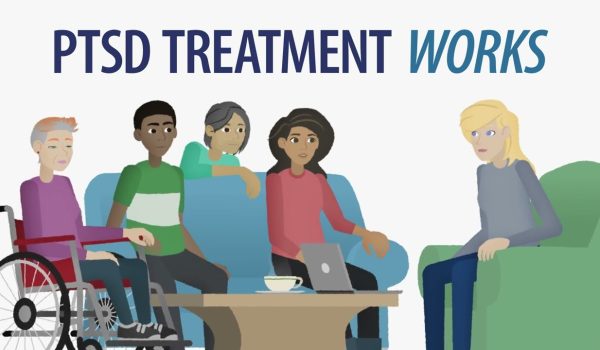
Help spread awareness and understanding
June is PTSD Awareness Month. Raising awareness can help those who are affected get the treatment they deserve. Join the conversation to raise awareness and reduce stigma.
It’s normal to have upsetting memories, feel on edge, or have trouble sleeping after a traumatic event. At first, it may be hard to do normal daily activities, like go to work, go to school, or spend time with people you care about. But most people start to feel better after a few weeks or months.
If it’s been longer than a few months and you’re still having symptoms, you may have PTSD. For some people, PTSD symptoms may start later on, or they may come and go over time.
Visit the National Center for PTSD website for more ways to raise awareness and or for help with PTSD.
Symptoms and Diagnosis of PTSD
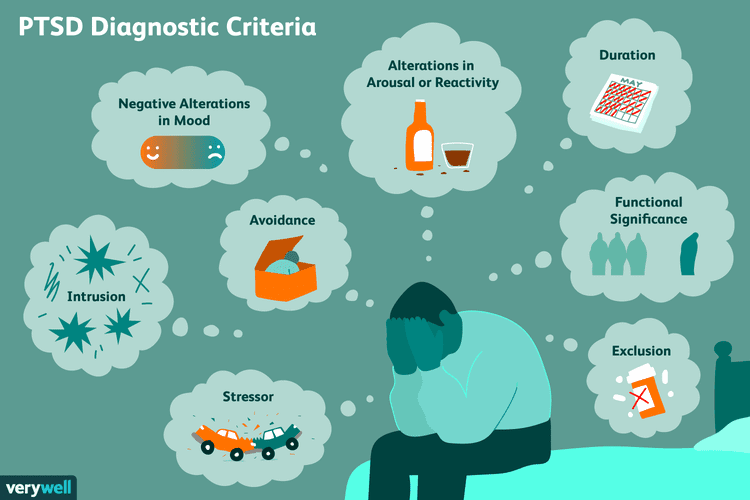
DSM-5 Criteria for PTSD
Criterion A: Stressor
There are specific requirements that must be met for a diagnosis of PTSD. These requirements are outlined in the 5th edition of the “Diagnostic and Statistical Manual of Mental Disorders” (DSM-5-TR).
Exposure to death, serious injury, or sexual violence can occur in one or more of these ways:
- Directly experiencing the event.
- Witnessing the event as it happened to someone else in person.
- Learning that a close relative or friend experienced death or was threatened with accidental or violent death.
- Repeatedly being exposed to distressing details of the event(s), often as part of a job (e.g., first responders, professionals handling child abuse cases). This does not include exposure through media such as TV, movies, or pictures, unless it is work-related.
Criterion B: Intrusion Symptoms
The traumatic event is re-experienced in persistent ways, such as:
- Recurrent, involuntary memories. Children over six may show this through repetitive play.
- Traumatic nightmares or upsetting dreams related to the event. Children might have nightmares not tied to the trauma.
- Dissociative reactions, like flashbacks, where it feels like the event is happening again, ranging from brief episodes to losing awareness. Children may reenact the events during play.
- Intense distress after seeing or hearing reminders of the trauma.
- Noticeable physical reactions, like increased heart rate, when exposed to trauma reminders.

Active Coping & Knowing That Recovery Is a Process
Active Coping
- Active coping means accepting the impact of trauma on your life and taking direct action to improve things.
- Active coping occurs even when there is no crisis. Active coping is a way of responding to everyday life. It is a skill that you can learn and develop.
Knowing That Recovery Is a Process
Following a traumatic event most people experience stress reactions. Understand that recovering from the trauma is a process and takes time. Knowing this will help you feel more in control. A few tips:
- Having an ongoing response to the trauma is normal.
Recovery is an ongoing, daily process. It happens little by little. It is not a matter of being cured all of a sudden. - Healing doesn’t mean forgetting traumatic events. It doesn’t mean you will have no pain or bad feelings when thinking about them.
- Healing may mean fewer symptoms and symptoms that bother you less.
- Healing means more confidence that you will be able to cope with your memories and symptoms. You will be better able to manage your feelings.
For additional information on coping with PTSD, visit the National Center for PTSD website.
If you are in crisis or are experiencing difficult or suicidal thoughts, call the National Suicide Hotline at 1-800-273 TALK (8255).
Sincerely,The Door Switch™
WHAT IS A SENTINAL EVENT?
 The Joint Commission defines sentinel events as occurrences to patients in medical facilities “…involving death or serious physical or psychological injury, or the risk thereof.” As you will note from the pie chart above, patient suicides are a comparatively frequent sentinel event identified by The Joint Commission. The Door SwitchTM was developed to mitigate the most common method of suicide employed in medical facilities—hanging using a door as a ligature point.
Please visit The Joint Commission for more information on sentinel events.
ABOUT US
The Door SwitchTM is the original top-of-the door ligature attempt warning system and holds U.S. Patents RE 42,991 and RE 44,039. We have been serving mental health professionals since 2006.
Each Door SwitchTM is a pressure sensor activated by approximately one to two pounds of downward pressure applied to the top, rather than the face (front or back surfaces), of the door. With system activation at the top of the door, ligature devices applied from either side of the door result in system alerts. Hospital staff are notified of system alerts by a combination of audible alarms, strobes, and door identification provided at a keypad typically located at a nurses’ station. The system utilizes proven Honeywell electronic components, including the Honeywell Vista 128BPT panel as the controller.
The Honeywell Vista 128BPT control panel provides an event log that records the times and dates of 512 events. The controller records the application of pressure to one of the system’s Door SwitchesTM, the removal of that pressure, and the turning of a key switch to silence the alarm. Logged events can be viewed from the keypad or downloaded to a computer and printed.
The Door SwitchTM has been installed in mental health facilities across the country. We are proud to state that we have many satisfied mental health facility clients and can provide you with their contact information for reference purposes.
For additional information, a demonstration of The Door SwitchTM, or a free quote, please call or email us at info@thedoorswitch.com.
